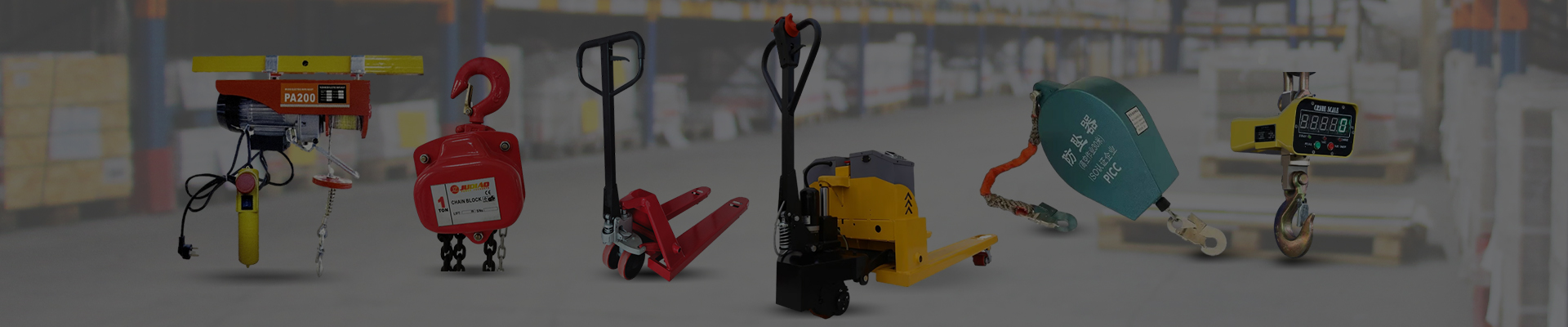


Having worked around industrial gear for more than a decade, I’ve seen many lifting tools come and go—some flashier than others, but few as reliable as the hand operated chain pulley block. Oddly enough, despite all the tech advances, this straightforward device remains a staple on workshop floors, construction sites, and manufacturing plants.
Why? Well, it boils down to a few points. The simplicity of its mechanical design means fewer parts to fail. The use of high-quality alloy steel chain and gears ensures long-term durability. And frankly, there’s a certain satisfaction in manually controlling the lifting process—you’re not just pushing a button; you’re connected to the task.
Over the years, I’ve noticed improvements in materials, like the move to heat-treated steel chains and corrosion-resistant finishes. Manufacturers rigorously test pulley blocks under heavy loads to meet international safety standards, commonly rated by WLL (Working Load Limit). That means you get a dependable device that won’t let you down—something you absolutely want in your lifting gear.
| Feature | Typical Specification |
|---|---|
| Working Load Limit (WLL) | 0.5 to 20 tons (varies by model) |
| Chain Material | Alloy Steel, Grade 80 or 100 |
| Lifting Height | 1.5m to 10m standard options |
| Load Chain Diameter | 6mm – 16mm |
| Finish | Powder Coating / Electrogalvanized |
| Operating Temperature Range | -20°C to +50°C |
One thing worth mentioning: some custom solutions tweak the lifting height or even chain type, depending on the environmental needs—like ultra-corrosive conditions found near the sea. It’s always smart to check with the vendor if you have special requirements.
| Vendor | Range of Capacities | Warranty | Customization Options | Price Level |
|---|---|---|---|---|
| QYJuli | 0.5 – 20 tons | 2 years | Available on request | Mid-range |
| IndustrialMax | 1 – 15 tons | 1 year | Limited | High |
| LiftPro | 0.75 – 10 tons | 2 years | Available | Mid to high |
Funny enough, one site I worked at had an old chain pulley block that had been in service for more than 15 years—still going strong! Maintenance is the real secret to longevity, and you shouldn’t overlook regular inspections, lubrication, and chain replacement.
Many engineers I know swear by keeping a spare chain block around—roughly the size for loads you handle frequently. It’s a small buffer that saves downtime, especially when unexpected heavy lifts pop up.
So, whether you’re pulling parts in a dusty workshop or lifting beams on a windy construction site, the hand operated chain pulley block remains an industry workhorse. Solid, reliable, and surprisingly adaptable for all kinds of jobs.
In real terms, while you might be tempted by powered hoists these days, the tactile control and simplicity of a manual chain block often win out. It feels like you’re engaging directly with your work, having that mechanical feedback—and that’s rare magic in modern machinery.
So next time you see one hanging in the shop, give it a second look. You might just appreciate the blend of engineering and old-school craftsmanship that makes it invaluable.
A quick note: Always follow safety protocols and manufacturer guidelines when using chain pulley blocks to avoid accidents. Proper training is essential.
Takeaway: The hand operated chain pulley block is a classic lifting tool where experience, durability, and trustworthiness come together—rare qualities in today’s fast-paced gear world.
References:
1. International Standards for Chain Hoists (ISO 7597)
2. QYJuli Product Specifications & User Guides
3. Experienced Industrial Equipment Operators’ Forum, 2023


 Afrikaans
 Albanian
 Amharic
 Arabic
 Armenian
 Azerbaijani
 Basque
 Belarusian
 Bengali
 Bosnian
 Bulgarian
 Catalan
 Cebuano
 China
China
 China (Taiwan)
 Corsican
 Croatian
 Czech
Czech
 Danish
 Dutch
Dutch
 Esperanto
 Estonian
 Finnish
 French
 Frisian
 Galician
 Georgian
 German
 Greek
Greek
 Gujarati
 Haitian Creole
 Hausa
Hausa
 Hawaiian
 Hebrew
 Hindi
Hindi
 Miao
Miao
 Hungarian
 Icelandic
 Igbo
Igbo
 Indonesian
 Irish
Irish
 Italian
 Japanese
 Javanese
 Kannada
 Kazakh
 Khmer
Khmer
 Rwandese
 Korean
 Kurdish
 Kyrgyz
 Lao
Lao
 Latin
Latin
 Latvian
 Lithuanian
 Luxembourgish
 Macedonian
 Malgashi
 Malay
Malay
 Malayalam
 Maltese
 Maori
Maori
 Marathi
 Mongolian
 Myanmar
 Nepali
 Norwegian
 Norwegian
 Occitan
 Pashto
 Persian
 Polish
 Portuguese
 Punjabi
 Romanian
 Russian
 Samoan
 Scottish Gaelic
 Serbian
 Sesotho
 Shona
Shona
 Sindhi
 Sinhala
 Slovak
 Slovenian
 Somali
 Spanish
 Sundanese
 Swahili
 Swedish
 Tagalog
 Tajik
Tajik
 Tamil
Tamil
 Tatar
Tatar
 Telugu
 Thai
Thai
 Turkish
 Turkmen
 Ukrainian
 Urdu
Urdu
 Uighur
 Uzbek
Uzbek
 Vietnamese
 Welsh
Welsh
 Bantu
Bantu
 Yiddish
 Yoruba
 Zulu
Zulu
 English