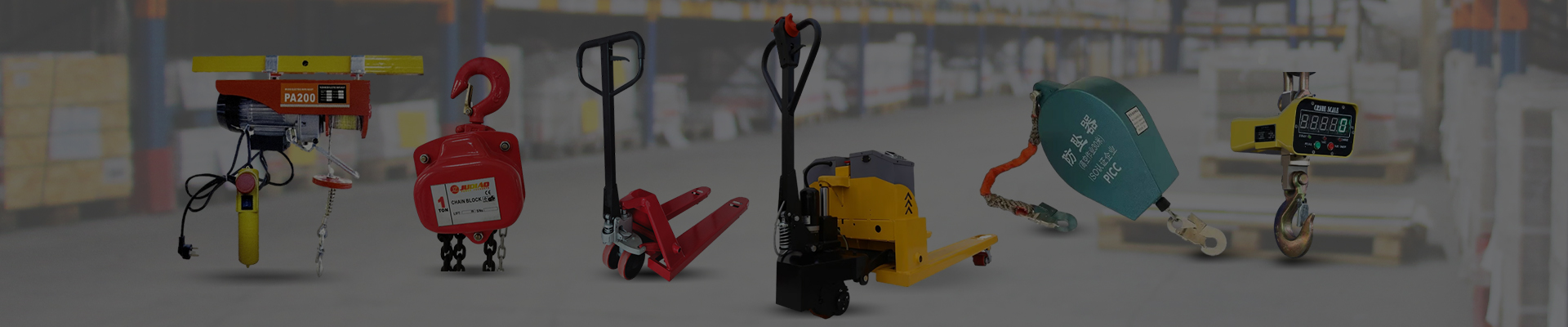


Having spent a fair chunk of my life around industrial equipment — and frankly, trying to fix, recommend, or upgrade it — I can tell you the heavy duty chain pulley block is one of those unsung heroes that quietly powers factories, construction sites, and shipyards alike. Maybe it’s because it’s so straightforward in its design that people overlook how cleverly engineered it truly is.
Now, when you first look at these pulley blocks, they don’t scream “high tech.” They’re big, strong, metal contraptions with chains running through them. But inside, there’s a lot of thought put into materials, load rating, and safety measures. The chain pulley block’s job is simple in theory: lift or pull really heavy stuff. But doing this safely without a hitch requires robust design and reliable parts.
Over the years, I noticed that most industrial sites tend to standardize on certain brands or types — not because they’re shiny or new, but because they withstand the brutal daily grind. It’s not unusual for a single pulley block to last decades if maintained properly. These devices often feature heat-treated alloy steel hooks and chains, geared for a slow, controlled, and ultra-smooth operation. It's a bit like riding a bike downhill with brakes that never fail—even when loaded to the max.
What really sets a heavy duty chain pulley block apart from smaller or lighter ones is its capacity and build. Loads can go from a modest half a ton up to 20, 30 tons or more, depending on the model. The gearing ratio and chain thickness increase accordingly. And, frankly, that stuff can’t be rushed; manufacturers run them through rigorous load tests — sometimes pushing well beyond stated capacity — before shipping. I’ve seen test certificates tucked away in user manuals, which reassures me if the supplier is upfront.
Speaking of suppliers, odd as it sounds, there’s a bit of an art to choosing the right chain pulley block vendor. Price isn’t always the best indicator — I’ve seen fancy labels that didn’t hold up and value-priced blocks with surprisingly good durability. Often, it boils down to local service, availability of spare parts, and the vendor’s ability to customize—for example, extra-long chains or specialty hooks for awkward lifts.
That reminds me of a project in a steel mill. The regular blocks weren’t cutting it, given the awkward positioning of some heavy molds. We commissioned a custom block with a twin chain setup and longer reach. It felt like a game-changer once installed. That’s the beauty of these blocks: simple, yes, but with room for customization so they suit your workflow.
| Specification | Details |
|---|---|
| Load Capacity | 0.5 to 30+ metric tons |
| Chain Material | Heat-treated alloy steel, grade 80 or above |
| Hook Type | Forged steel, safety latch included |
| Gear Type | Worm gear or spur gear for controlled movement |
| Load Test Standard | EN 13157 / ASME B30.16 compliant |
| Chain Fall Options | 1, 2, or 3 falls for increased mechanical advantage |
I have compiled a quick vendor comparison table below based on reliability, customization, price range, and global availability. It’s by no means exhaustive, but it reflects what I’ve seen firsthand in North America and Asia markets.
| Feature | QYJULI | Competitor A | Competitor B |
|---|---|---|---|
| Product Range | 0.5t to 30t+ | 1t to 20t | 0.5t to 25t |
| Customization Options | Excellent (chains, hooks, finishes) | Limited | Moderate |
| Price | Competitive | Premium | Budget |
| Spare Parts Availability | High, reliable supply | Medium | Varies |
| Global Distribution | Strong presence in Asia, Europe, N. America | Mostly localized | Regional |
One thing I tell newcomers in maintenance or rigging: trust your pulley blocks as much as you trust your eyes—and your gut. If something feels off, double check. Over the years, these blocks have saved the day (and backs) many a time. But they require respect, regular inspection, and decent lubrication to stay in top shape.
In real terms, a well-chosen heavy duty chain pulley block is more than just hardware — it’s a small investment for big safety and operational value. So when you consider your next lift, you might want to give these sturdy, no-nonsense tools a closer look. I suppose that’s why the industrial world keeps leaning on them, quietly but firmly.
Reflecting back, it’s funny how such a simple mechanical device can be so pivotal. Goes to show you don’t always need high tech to get the job done — just a little smart engineering and the right materials.


 Afrikaans
 Albanian
 Amharic
 Arabic
 Armenian
 Azerbaijani
 Basque
 Belarusian
 Bengali
 Bosnian
 Bulgarian
 Catalan
 Cebuano
 China
China
 China (Taiwan)
 Corsican
 Croatian
 Czech
Czech
 Danish
 Dutch
Dutch
 Esperanto
 Estonian
 Finnish
 French
 Frisian
 Galician
 Georgian
 German
 Greek
Greek
 Gujarati
 Haitian Creole
 Hausa
Hausa
 Hawaiian
 Hebrew
 Hindi
Hindi
 Miao
Miao
 Hungarian
 Icelandic
 Igbo
Igbo
 Indonesian
 Irish
Irish
 Italian
 Japanese
 Javanese
 Kannada
 Kazakh
 Khmer
Khmer
 Rwandese
 Korean
 Kurdish
 Kyrgyz
 Lao
Lao
 Latin
Latin
 Latvian
 Lithuanian
 Luxembourgish
 Macedonian
 Malgashi
 Malay
Malay
 Malayalam
 Maltese
 Maori
Maori
 Marathi
 Mongolian
 Myanmar
 Nepali
 Norwegian
 Norwegian
 Occitan
 Pashto
 Persian
 Polish
 Portuguese
 Punjabi
 Romanian
 Russian
 Samoan
 Scottish Gaelic
 Serbian
 Sesotho
 Shona
Shona
 Sindhi
 Sinhala
 Slovak
 Slovenian
 Somali
 Spanish
 Sundanese
 Swahili
 Swedish
 Tagalog
 Tajik
Tajik
 Tamil
Tamil
 Tatar
Tatar
 Telugu
 Thai
Thai
 Turkish
 Turkmen
 Ukrainian
 Urdu
Urdu
 Uighur
 Uzbek
Uzbek
 Vietnamese
 Welsh
Welsh
 Bantu
Bantu
 Yiddish
 Yoruba
 Zulu
Zulu
 English